Olive Oil Harvesting in Tuscany
Olive Oil Harvesting at La Casa Cappellina
If you arrive in this part of Tuscany in mid-late October or early November, you’ll notice a subtle shift in the Tuscan landscape. The colour deepens, not dramatically, but enough that the greens begin to feel heavier, deeper, more saturated. The light softens. Mornings carry a slight chill and often a light mist that wasn’t there before. And then, before you know it, the olive harvest begins!
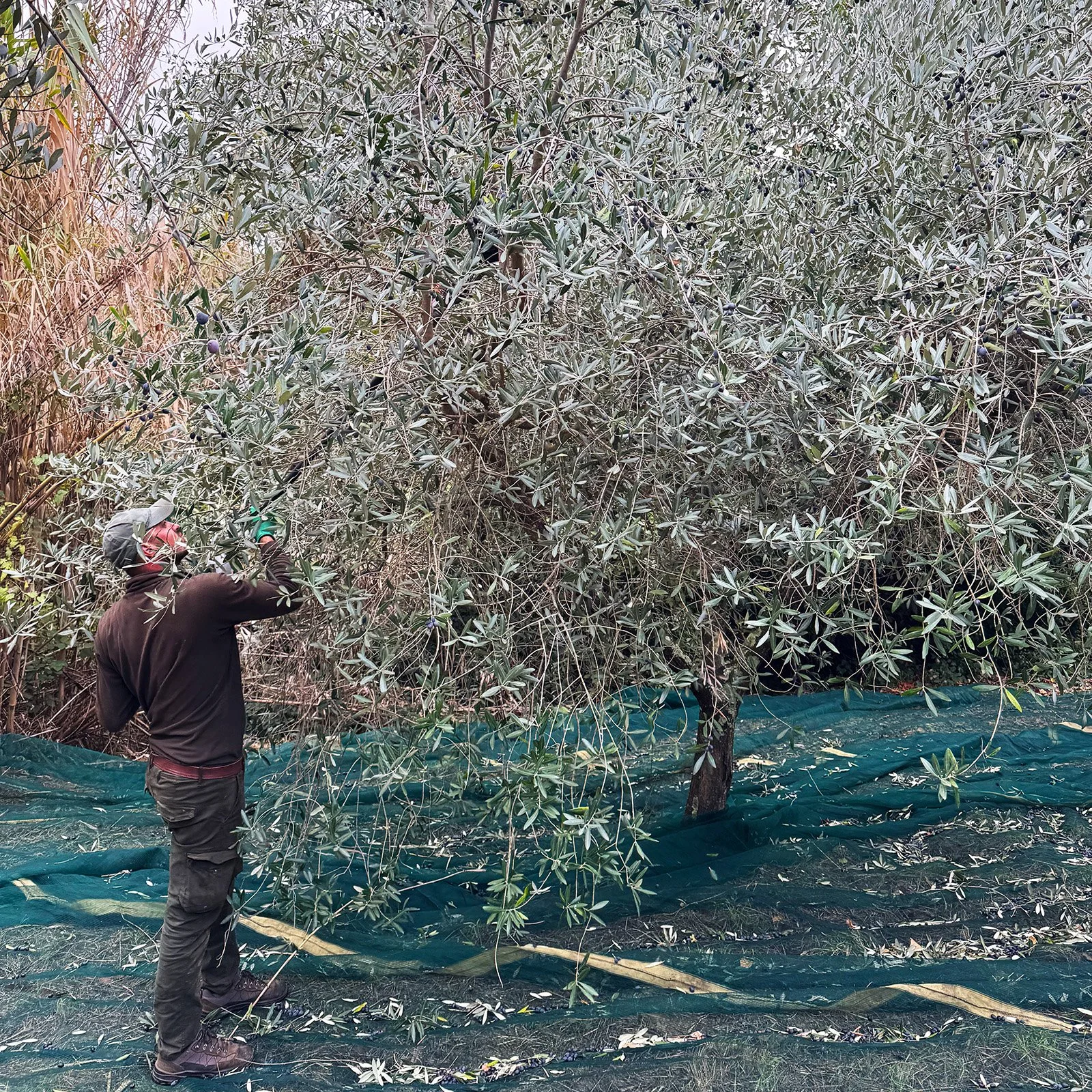
It’s not announced. There are no signs, no neat explanations, no sense that anything is being staged for visitors or tourists. You simply begin to see it happening. Nets stretched out beneath the olive trees heavy with fruit like loose, dark sails. Ladders propped at improbable angles. People moving quietly (and sometimes loudly!) among the branches, their hands working with a familiarity that comes from years of repetition and familiarity rather than instruction.
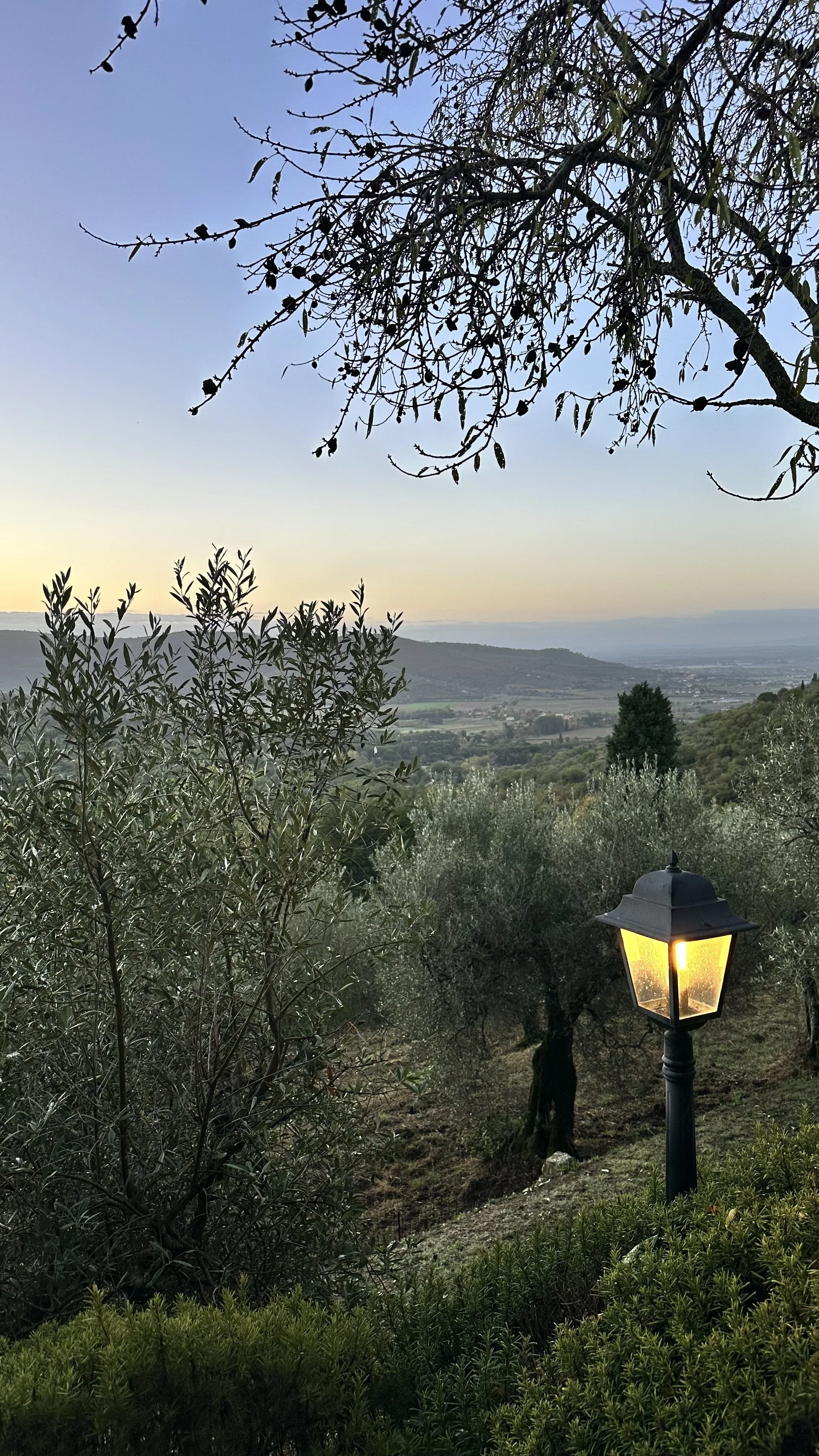
From La Casa Cappellina, you don’t have to go far to come across it. The groves are part of the landscape here, as integral as the cypress lines, lavender and the low stone walls. If you walk to the pool, into the garden or drive out in the morning, you’ll pass small groups already at work; there’s no rush, but there is purpose in every movement.
What strikes you first is how physical it is. Olive picking is not delicate in the way one might imagine, it’s not like picking an apple from a tree. Hands move firmly and swiftly through the branches, stripping fruit with a practised and precise motion. Sometimes small handheld rakes are used, combing through the leaves so that olives fall onto the nets below with a soft, continuous patter. It’s repetitive, and it does requires patience. There is no shortcut, no clever efficiency that removes the need for time as time is what is needed.
Olives ready at La Casa Cappellina
If you’re invited to join in, or arrange to spend a morning with one of the local producers, you quickly understand how little of this can be learned from watching alone. The branches are denser than they look and hide more olives than you expect. Your hands are slow where theirs move easily. It takes time before you find any sort of rhythm at all, and even then it feels unfamiliar and you feel like you’re fumbling at a task you thought was so simple!
There is conversation, of course, but it’s not constant; there’s too much concentration in the air. People work alongside one another in a way that feels companionable rather than the usual Italian chat. The soundscape is simple. The rustle of leaves. The occasional thud of olives landing on the nets. A voice calling out from one tree to another. Somewhere in the distance, perhaps, a dog barking or a car passing along a road you can’t quite see.
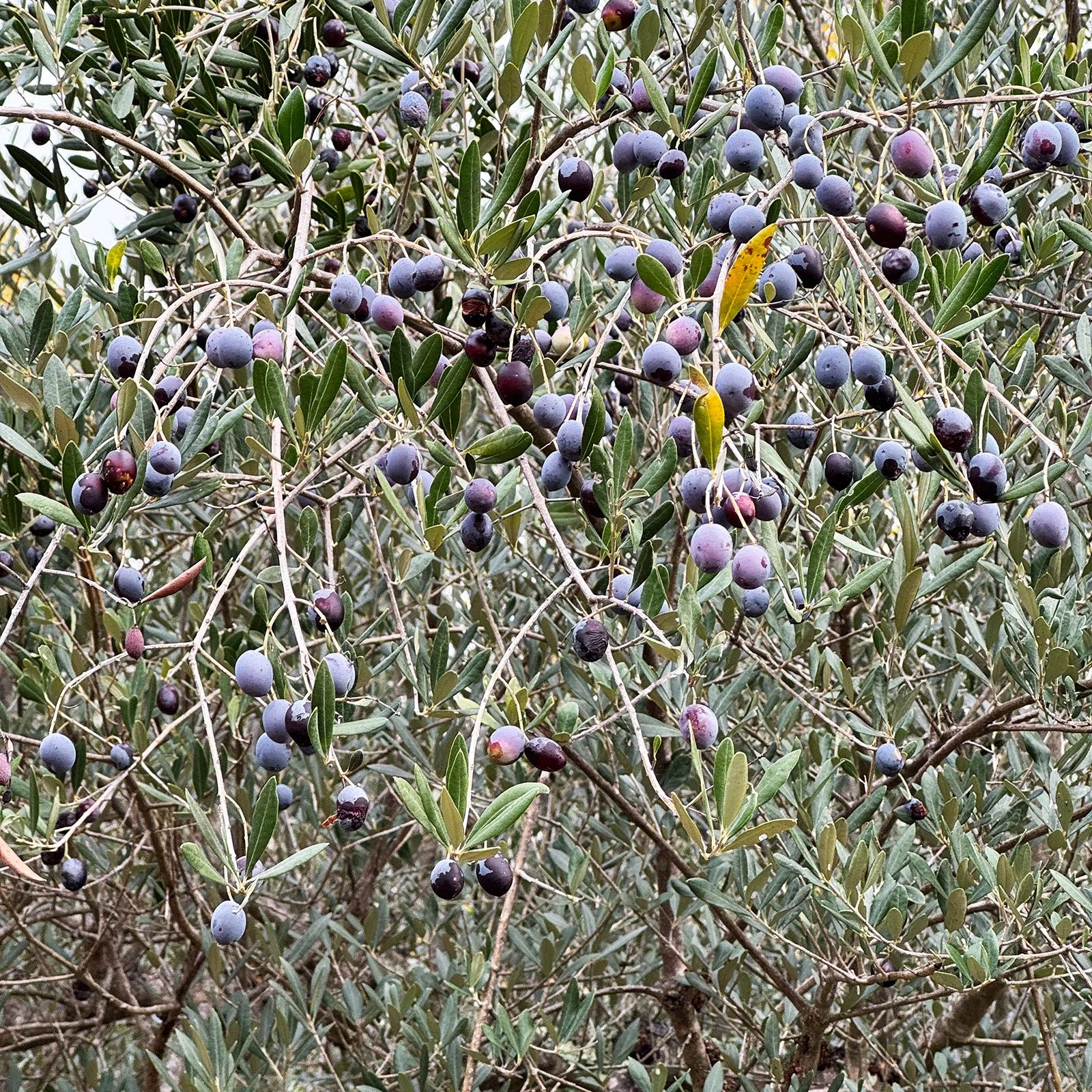
You look at the empty nets and can’t quite see how they are going to strain under the weight of the olives scattered amongts the branches. As the morning goes on, however, the nets begin to fill. The olives are gathered, poured into crates, their weight more noticeable than you expect. This is where the work becomes tangible. What looked like a scattered handful across branches becomes, collected together, something substantial. And still, looking at it, you realise how many trees it takes to produce even a small quantity of extra virgin olive oil.
The pressing often happens the same day, after all freshness matters. You follow the crates to the frantoio, the local mill, where the process shifts from field to something more mechanical, though no less grounded in tradition. The olives are washed, crushed, and slowly transformed into thick green oil that is almost startling in its colour when you first see it.
Tasting it is a moment that tends to stay with people who are experiencing it for the first time.
There is nothing elaborate about it. No ceremony. A piece of bread, often still warm, is torn and passed around. The oil is poured generously, thicker than you expect, a deep green that catches the light. You taste, and the flavour is immediate and unmistakable. Grassy. Peppery. Slightly bitter in a way that feels clean and fresh rather than harsh.
It’s very different from the oil most of us are used to. Not because it’s trying to be better, but because it’s closer to where it began. Less handled. Less distant from the tree. Pure, unadulterated extra virgin olive oil. Pure nectar.
What becomes clear, over the course of a morning like this, is that olive oil here is not an accessory to meals or a product to be admired from a distance like in other countries. It’s part of the fabric of Italian life. It carries with it the work of the season, the weather of that particular year, the condition of the olive trees, the care of the people who tend them. Every bottle of olive oil has a quiet story behind it.
Back at La Casa Cappellina, you’ll notice it differently after that and appreciate it more!
You pour it over tomatoes, over bread, over whatever you are cooking for supper, and there’s a new awareness of what it took to produce something so apparently simple and yet so utterly delicious. The landscape you’ve been looking at all week becomes more than just a view. It becomes active, productive, shaped by human hands as much as by time.
After the olive oil harvest
And perhaps that’s the real gift of witnessing an olive oil harvest in Tuscany. It draws you closer to the land, the people and traditions, not in a grand or sentimental way, but in a practical, grounded sense of understanding. You begin to see that this part of Tuscany is not preserved for admiration. It’s lived in. Worked. Cared for, season after season, year after year. After all a stay at La Casa Cappellina is where you can enjoy living like a local.
By the time you leave, the nets will be folded away, the olive trees will stand as they always have, many for centuries, and the olive groves will return to their quiet, almost timeless appearance. If you didn’t know what had taken place there, you might pass them without a second thought.
But once you’ve seen it, you won’t look at an olive or olive tree the same away again!