Into the Woods: Truffle Hunting Year Round with Tartufi Bianconi
Truffle Hunting in Umbria with Tartufi Bianconi
Most people think truffle hunting is a winter thing. A cold morning in November, a dog disappearing into the mist between the oaks, the famous white truffle held up to the weak light like something excavated from another world.
And yes, that is part of it. But it is not all of it. The truffle calendar runs longer and stranger than most visitors realise, and going out with Tartufi Bianconi means you can follow it through every season.
Forty Years, One Family, One Valley
Tartufi Bianconi was founded in the Upper Tiber Valley, in the heart of the Umbrian-Tuscan landscape where lush forest meets a climate that truffles find irresistible. The family has spent four decades searching for, studying and sharing this land's most prized produce. Saverio Bianconi's passion runs so deep that in 2002 he established a small museum dedicated entirely to the truffle, its origins sparked by a page he found in a sixteenth-century herbarium by Mattioli. It is the kind of detail that tells you everything about who you are dealing with: people who do not just sell truffles, but live them.
Going out with them is not a tourist experience dressed up to feel authentic. It is the genuine thing.
What Grows When
Spring (March to May): the Bianchetto
The Bianchetto, or Tuber borchii, is the truffle most people overlook. Smaller than its famous white cousin, it has a sharper, more garlicky character that suits pasta and eggs beautifully. Spring hunting takes you into the woods when the undergrowth is coming back to life, the air carrying that green, damp smell of renewal. It is a good season to begin if you have never hunted before. The woods are generous and the light is kind.
Summer (June to August): the Scorzone
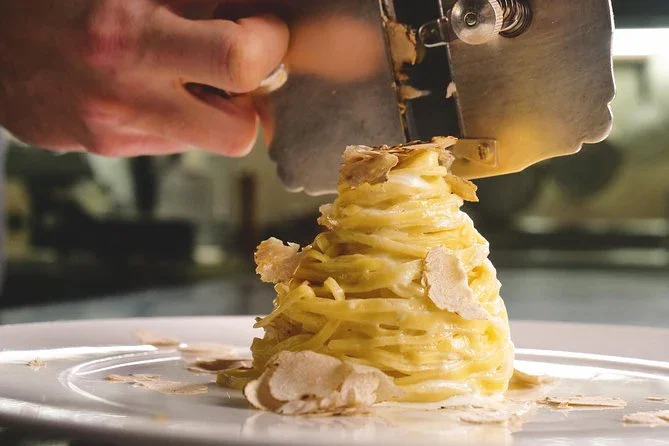
The summer truffle, Tuber aestivum, is robust and earthy. It lacks the heady intensity of the white truffle but holds its own, particularly when shaved over simply cooked food or stirred through butter. Summer hunting starts early, before the heat builds, and there is something good about being in the woods at that hour, the birdsong loud, the dogs working the shadows under the trees while the fields beyond are already bleached and bright.
Autumn (September to November): the Precious White
This is the one that draws people from across the world. Tuber magnatum pico, the white truffle, cannot be farmed or cultivated. It grows where it chooses, found only by a dog with the right nose and a hunter who knows the land. The scent is extraordinary: warm, complex, faintly of honey and forest floor and something that resists description entirely. The season peaks in October and November, and going out in those weeks, in the early mist, with the leaves turning and the ground soft from the first autumn rains, is one of those experiences that stays with you long after you have left.
Winter (December to February): the Black Truffle
The Tuber melanosporum, the Périgord black truffle, comes into its own in winter. Its flavour is deeper and earthier than the white, more forgiving in the kitchen and arguably more versatile. Winter hunting has its own mood: the woods stripped back, the ground frozen in places, the dogs' breath visible in the cold air. There is nothing spare or decorative about it. Just the hunter, the dog and the ground beneath.
The Dog
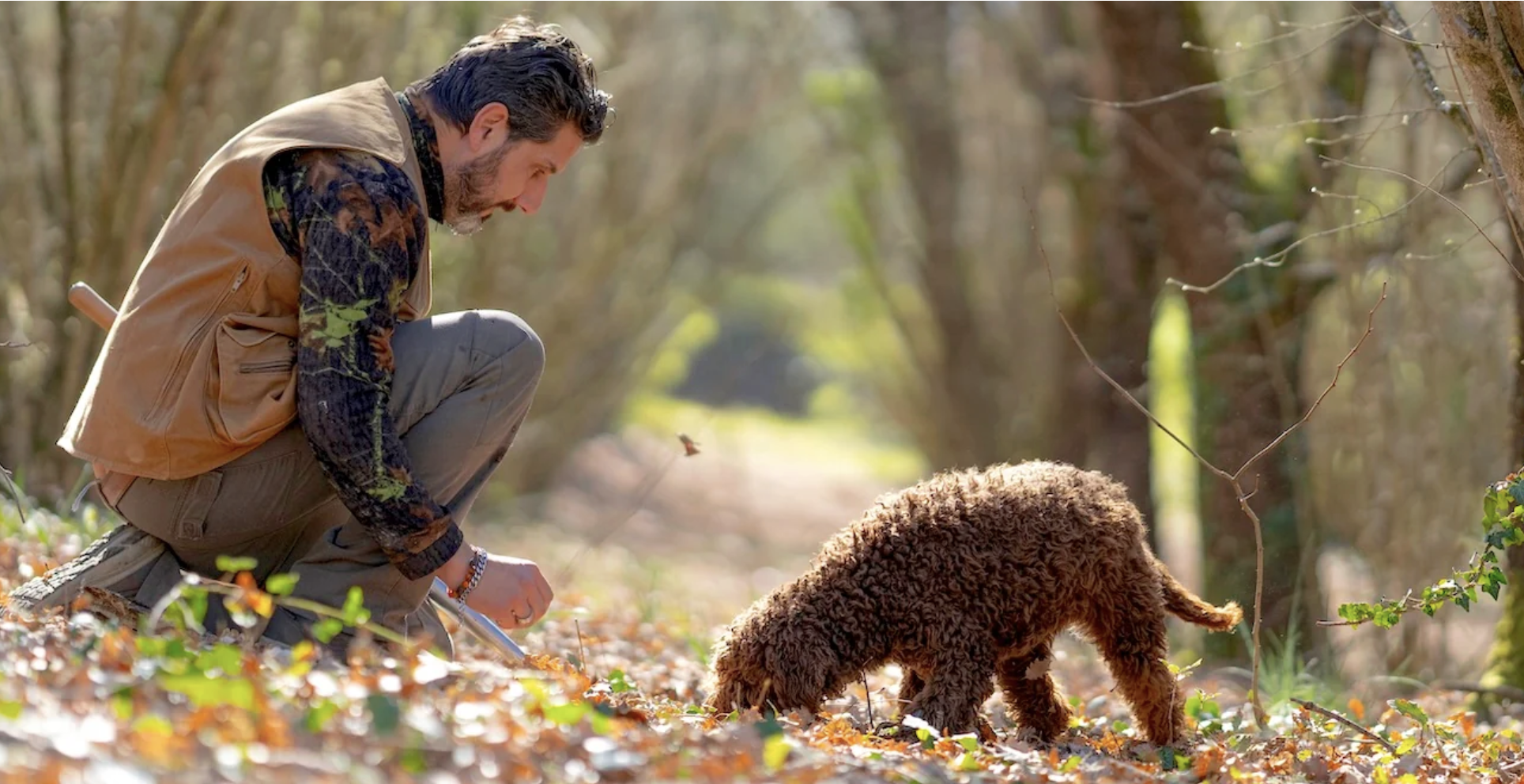
A word about the dogs. They are the point of the whole enterprise.
Lagotti Romagnoli are the traditional breed, though skilled hunters often work with mixed breeds trained from puppyhood. What they share is an extraordinary nose and total focus when they are working. Watching a truffle dog is one of the more quietly thrilling things you can do in the Italian countryside. The dog moves in apparently random loops through the undergrowth, then stops, circles, drops its nose and begins to dig with a concentration that looks almost urgent. The hunter moves in, kneels, and lifts out something that has been growing in the dark for months.
After the Hunt
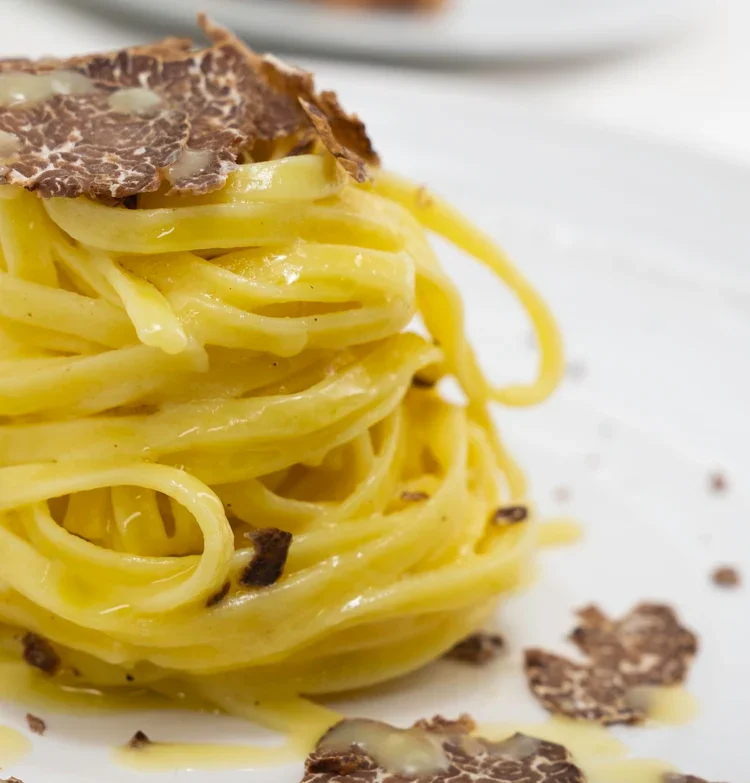
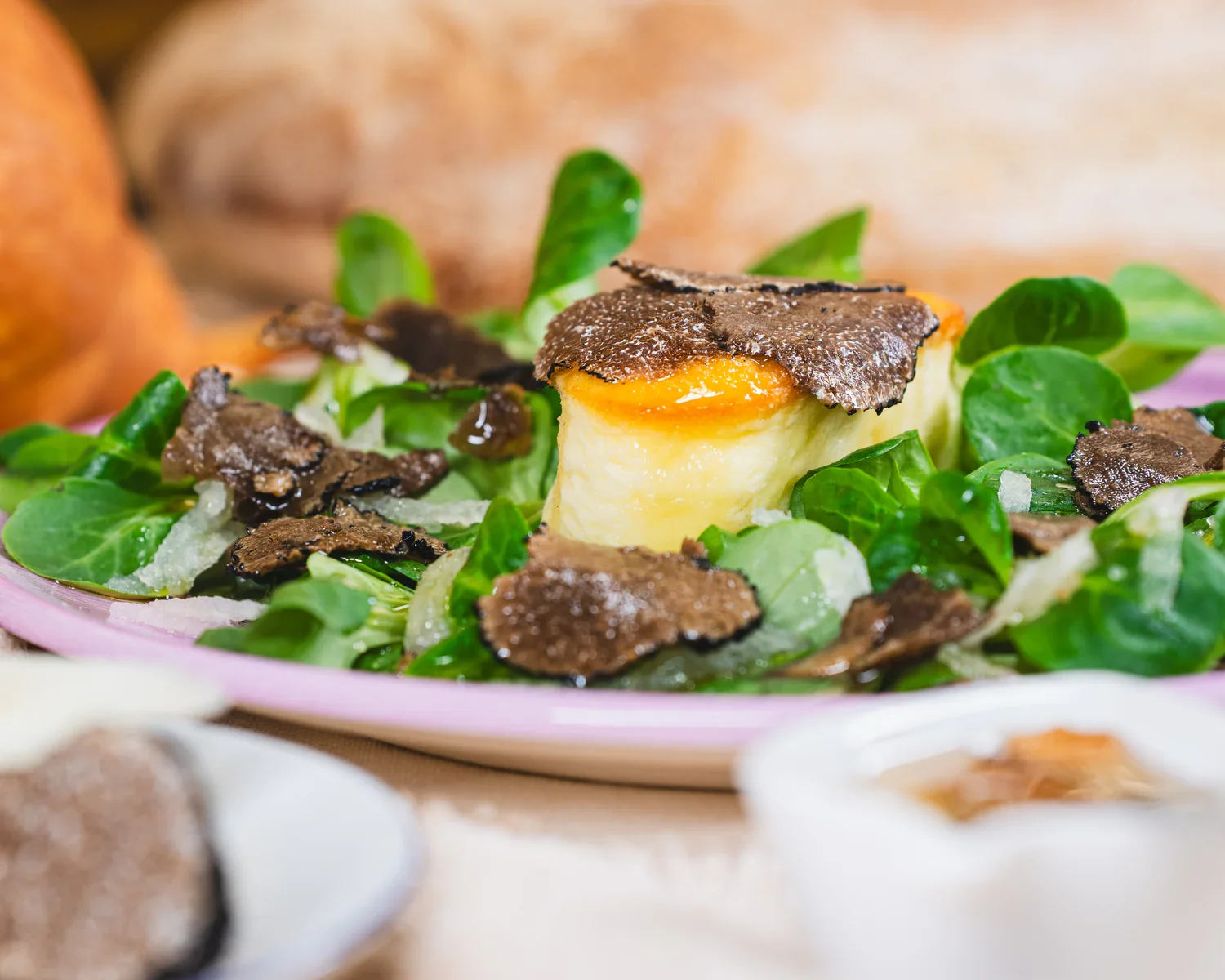
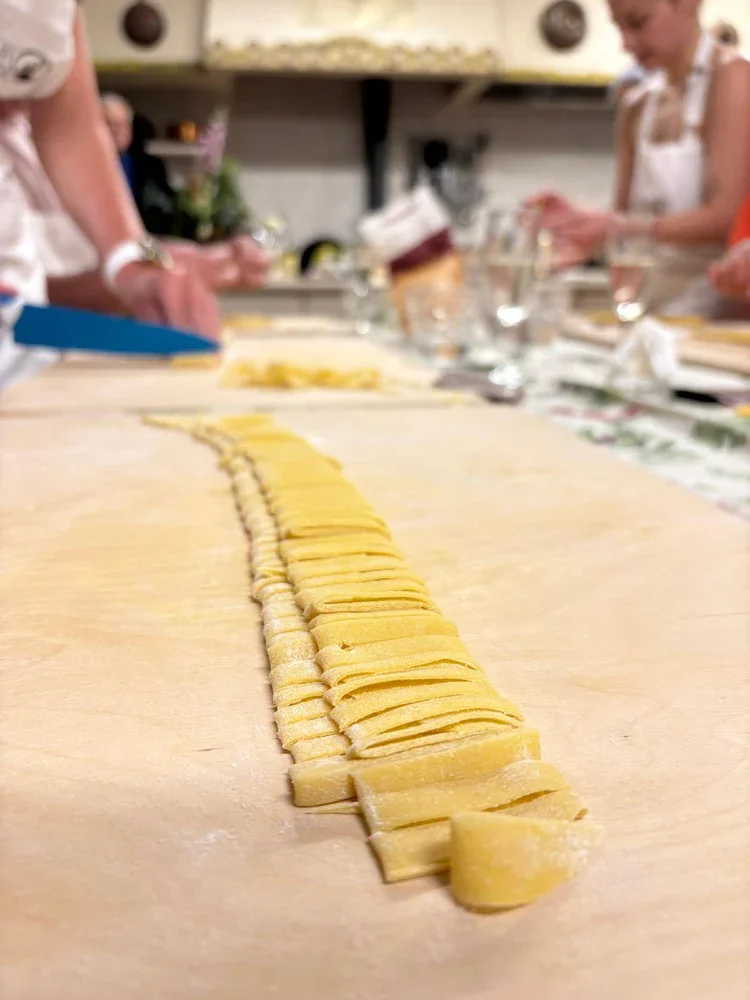
The morning does not end in the woods. The Bianconi experience also includes a sensory tasting and a cooking class: you learn what to do with what has been found, how to handle a truffle without wasting what makes it exceptional, and how to let it do most of the talking in the kitchen. There will be eating. There will almost certainly be wine. The kind of late morning that stretches into afternoon without anyone particularly minding.
From La Casa Cappellina
The Upper Tiber Valley sits just across the border from Cortona, close enough for a morning out and back in time for lunch. We can arrange a truffle hunt with Tartufi Bianconi for guests staying at La Casa Cappellina at any time of year. Each season offers something different: a different truffle, a different mood in the woods, a different story to take home. Get in touch and we will find the morning that fits your stay.
Because the woods are always worth walking into. You just need to know who to go with.
Contact us to arrange your truffle hunt with Tartufi Bianconi.